
Using Your Tax Refund as a Down Payment: Is It a Smart Move?
TL;DR
Yes, you can use your tax refund as a down payment when buying a home. Most lenders accept it as a legitimate source of funds as long as it is properly documented. Using your refund can help you reach your savings goal faster, reduce your loan amount, and potentially lower your monthly mortgage payment. Just make sure you also plan for closing costs and emergency savings before committing the entire refund.
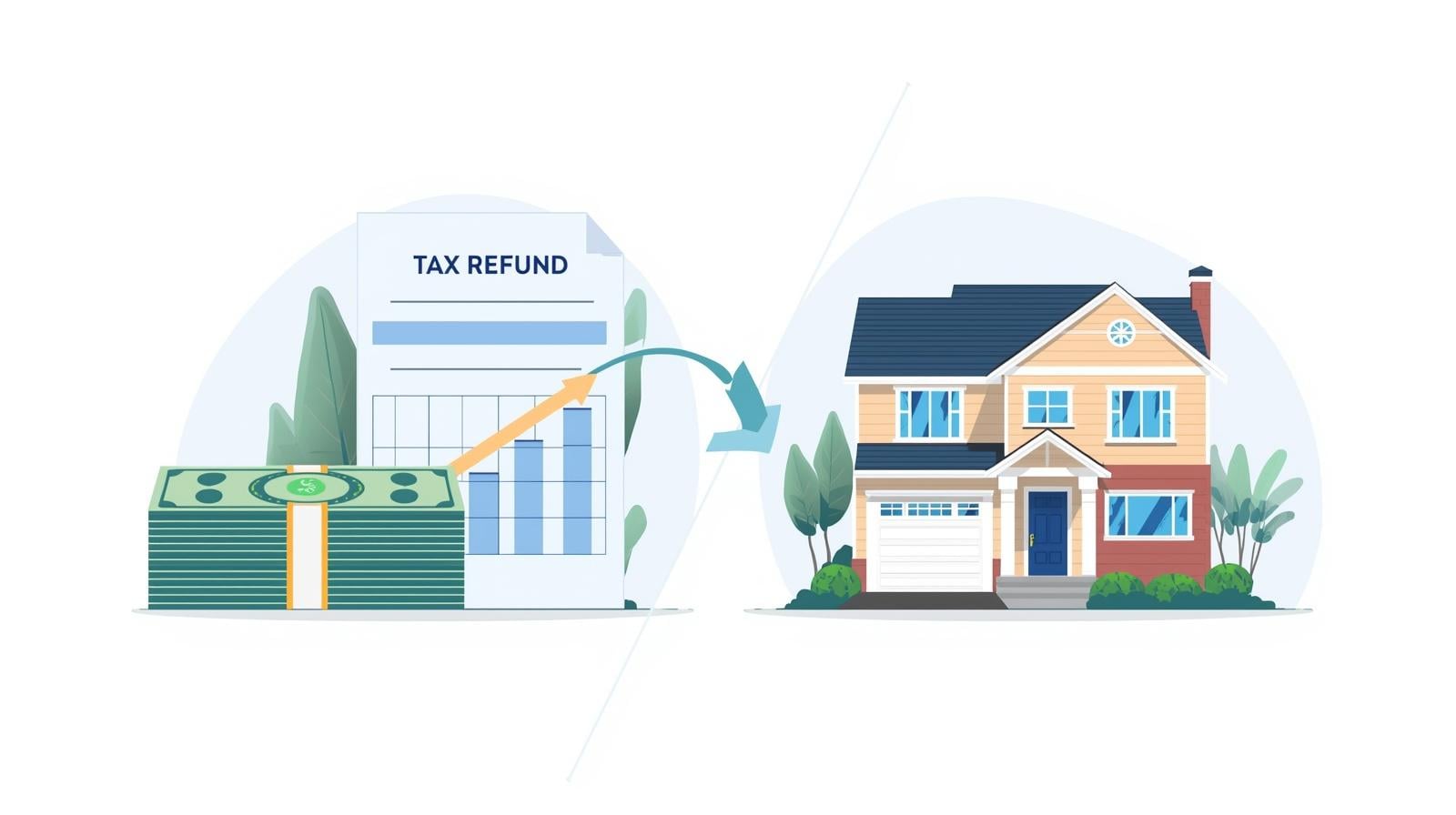
Can Your Tax Refund Help You Buy a Home?
Tax season is here, and for many Americans a tax refund is the largest single payment they receive all year.
While it can be tempting to spend that money on a vacation or new electronics, it can also be a powerful step toward homeownership.
If you’ve been thinking about buying a home, that refund could help cover some of the biggest upfront costs.
But the real question is: Is using your tax refund for a down payment a smart financial decision?
Let’s break down what buyers should consider.
1. The Advantage: Jumpstarting Your Homeownership Goals
For many first-time buyers, the biggest obstacle isn’t qualifying for a mortgage — it’s saving enough money upfront.
Most loan programs require anywhere from 3% to 20% down, depending on the loan type. That can take years to save.
A tax refund can help close the gap.
For example, if you’re only a few thousand dollars short of your savings goal, your refund could allow you to enter the market sooner instead of waiting another year.
This can be especially helpful during the spring homebuying season, when more homes become available but competition also increases.
2. Documentation: What Your Lender Needs to See
Mortgage lenders must verify where your funds come from. This process protects against fraud and ensures buyers are not taking on additional debt to qualify.
If you plan to use your tax refund, expect to provide a clear financial paper trail.
Typical documentation includes:
Proof of Refund: A copy of your tax return transcript or a bank statement showing the deposit from the IRS.
Bank Statements: Most lenders request the most recent two months of bank statements.
Seasoned Funds: Ideally, the refund should already be deposited into your bank account so it appears on your statements. This helps verify the funds are legitimately yours.
3. Down Payment vs. Closing Costs
Many buyers assume the down payment is the only upfront cost when purchasing a home.
In reality, closing costs are another important expense.
These costs may include:
Loan origination fees
Appraisal fees
Title insurance
Property taxes and insurance prepayments
Depending on your refund amount, it may make more sense to use the money toward closing costs instead of the down payment.
Reducing your closing costs can significantly lower the amount of cash you need to bring to the closing table.
4. Consider Your Overall Financial Picture
While using your tax refund toward a home purchase can be a smart move, it’s important to consider your entire financial situation first.
Here are a few questions to ask yourself:
Do you have high-interest debt?
Paying off credit cards with high interest rates may improve your credit score and mortgage qualification.
Do you have an emergency fund?
Homeownership comes with unexpected expenses like repairs or maintenance. Having savings after closing is essential.
A balanced financial approach is always the best strategy.
5. Turning Your Refund Into Your Future Home
If buying a home is one of your goals this year, your tax refund can be a valuable tool.
The next steps are simple:
Deposit your refund into your bank account.
Keep documentation showing the source of the funds.
Speak with a lender to update your pre-approval based on your new savings.
Having those funds ready can strengthen your position when making an offer.
Bottom Line
Using your tax refund as part of your down payment is not only allowed — it’s a strategy many buyers successfully use every year.
With proper documentation and smart planning, that refund could bring you one step closer to owning your home.
If you’re thinking about buying this year, it may be the perfect time to explore your options.
Frequently Asked Questions
Q: Can I use my tax refund as a down payment on a house?
A: Yes. Most lenders allow tax refunds to be used for a down payment as long as the funds are documented and deposited in your bank account.
Q: What proof do lenders need for tax refund funds?
A: Lenders typically require a tax return transcript and bank statements showing the IRS deposit.
Q: Can a tax refund cover closing costs instead of the down payment?
A: Yes. Many buyers use their refund to cover closing costs, which reduces the amount of cash required at closing.
Q: How long should the refund stay in my bank account before applying for a mortgage?
A: Ideally, it should appear on your recent bank statements so the lender can verify the source of funds.
Q: Should I use my tax refund for a home purchase or pay off debt first?
A: It depends on your financial situation. Paying off high-interest debt may improve your credit and mortgage qualification before buying.
By Alex Parmenidez, Broker Associate | Coldwell Banker Realty
Alex Parmenidez | Broker Associate Licensed in RI, CT, & MA | Coldwell Banker Realty
196 Waterman St, Providence, RI 02906
C: (401) 426-4825 | O: (401) 351-2017
Check out this article next
Divulgaciones Inmobiliarias en Rhode Island
Las transacciones inmobiliarias en Rhode Island requieren divulgaciones específicas dependiendo del tipo de propiedad y la situación.
Read Article