
Finished vs. Semi-Finished Basements: What Buyers Should Know
TL;DR
A finished basement is designed as usable living space, while a semi-finished basement offers partial improvements but may not function as a fully finished area. Understanding the differences can help buyers evaluate value, functionality, maintenance needs, and future renovation potential.
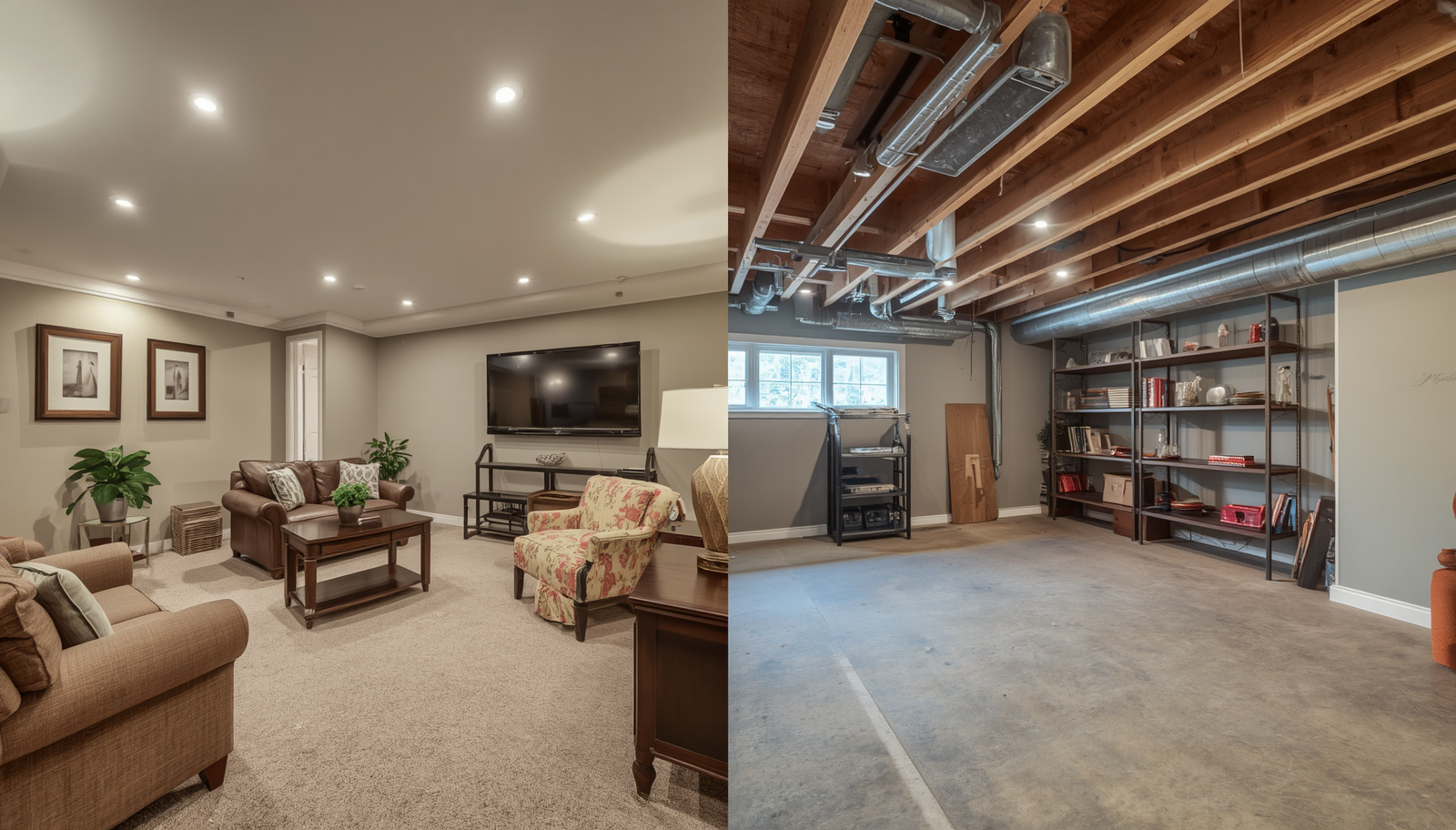
What Is a Finished Basement?
A finished basement is a lower-level space that has been renovated to function similarly to the rest of the home.
Finished basements often include:
- Finished walls and ceilings
- Flooring throughout the space
- Heating and cooling
- Electrical outlets and lighting
- Fully usable living areas
Many homeowners use finished basements as family rooms, home offices, guest spaces, gyms, playrooms, or entertainment areas.
For buyers, a finished basement can provide valuable additional living space without increasing the home's footprint.
What Is a Semi-Finished Basement?
A semi-finished basement falls somewhere between an unfinished and fully finished space.
These basements may include:
- Painted or partially finished walls
- Basic flooring
- Lighting and electrical improvements
- Open utility areas
- Exposed ceilings or mechanical systems
While semi-finished basements are often functional, they typically do not offer the same level of comfort or finished appearance as a fully finished basement.
However, they may provide an excellent opportunity for future customization.
How Does Basement Finish Affect Home Value?
Many buyers view basement space as a significant benefit, especially when it adds flexibility to the home.
A finished basement may offer:
- Additional usable living space
- Better functionality for families
- Increased buyer appeal
- Greater versatility for work or recreation
A semi-finished basement may not contribute as much value as a fully finished one, but it can still be attractive to buyers who want storage, workshop space, or future renovation potential.
It's important to remember that not all basement space is counted the same way in official square footage calculations, so buyers should ask how the space is represented in the listing.
What Should Buyers Look For?
Whether a basement is finished or semi-finished, buyers should carefully evaluate its condition.
Important things to look for include:
- Signs of water intrusion
- Moisture or mold concerns
- Proper insulation
- Adequate ceiling height
- Heating and cooling access
- Quality of workmanship
- Building permits for renovations
In Rhode Island, Massachusetts, and Connecticut, basements can be particularly susceptible to moisture issues due to seasonal weather conditions, making inspection especially important.
Which Option Is Better for Buyers?
The right choice depends on your needs and goals.
A finished basement may be ideal for buyers seeking immediate living space and convenience.
A semi-finished basement may appeal to buyers who:
- Want lower upfront costs
- Need storage space
- Plan future renovations
- Prefer customizing the area themselves
Neither option is automatically better. The key is understanding how the space fits your lifestyle and long-term plans.
Frequently Asked Questions
What is the difference between a finished and semi-finished basement?
A finished basement functions as completed living space with finished walls, flooring, and ceilings. A semi-finished basement includes some improvements but may still have exposed utility areas or unfinished sections.
Does a finished basement increase home value?
In many cases, yes. Finished basements can improve buyer appeal and provide additional usable living space, although value varies by market and property.
Are semi-finished basements worth considering?
Absolutely. Semi-finished basements can offer flexibility, storage, and renovation potential at a lower cost than fully finished spaces.
Should buyers worry about moisture in basements?
Yes. Buyers should always check for signs of water intrusion, mold, drainage issues, and humidity regardless of whether the basement is finished or unfinished.
Does basement square footage count as living space?
It depends on local guidelines and how the space is finished. Buyers should verify how basement areas are represented in the home's official square footage.
By Alex Parmenidez, Broker Associate | Coldwell Banker Realty
Alex Parmenidez | Broker Associate Licensed in RI, CT, & MA | Coldwell Banker Realty
196 Waterman St, Providence, RI 02906
C: (401) 426-4857 | O: (401) 351-2017
Check out this article next

La Diferencia Entre el Valor de Mercado y el Valor de Tasación
El valor de mercado y el valor de tasación no siempre son iguales. El valor de mercado refleja lo que los compradores están dispuestos a…
Read Article