
Eviction Process in Rhode Island: Step-by-Step Timeline
TL;DR
In Rhode Island, eviction is a formal court-controlled legal process. A landlord may not remove a tenant without a court order—even for nonpayment of rent. Eviction requires proper notice, court filing, a hearing, and a court-issued eviction order.
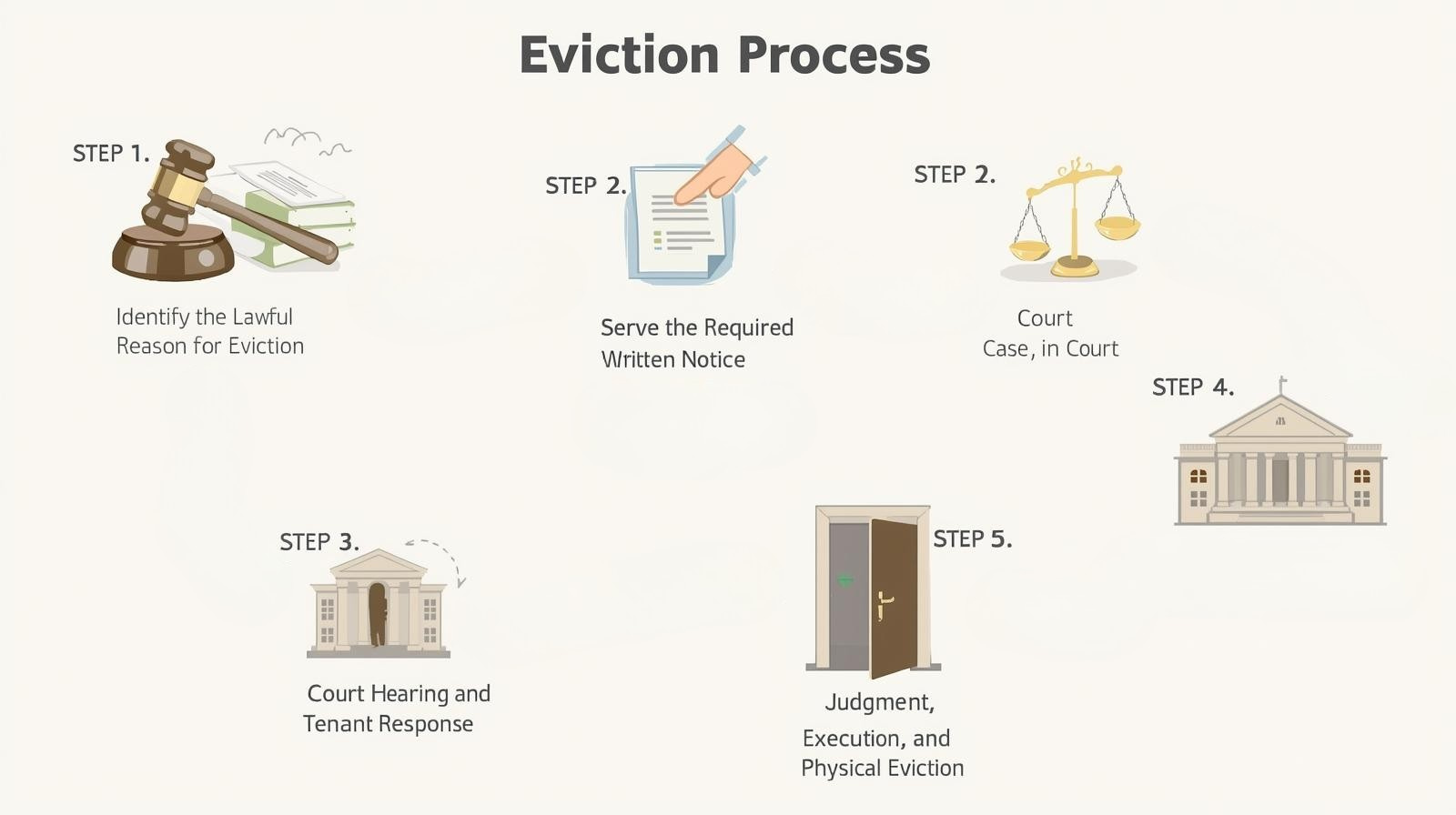
Understanding Evictions in Rhode Island
Eviction is one of the most misunderstood areas of landlord-tenant law. In Rhode Island, tenants are legally protected against self-help measures by landlords. Actions such as changing locks, shutting off utilities, or physically removing a tenant’s belongings without a court order are illegal and can result in fines or lawsuits.
Following the proper legal eviction process protects both the landlord’s property rights and the tenant’s legal protections. Even if rent is unpaid or a lease is violated, Rhode Island law ensures that eviction is a regulated, court-monitored procedure, providing transparency and fairness for all parties.
Step 1: Identify the Lawful Reason for Eviction
Before beginning the eviction process, the landlord must have a valid legal reason. Rhode Island law recognizes several acceptable reasons:
Nonpayment of rent: The tenant has failed to pay rent according to the lease agreement.
Lease violations: Breach of specific lease terms, such as unauthorized pets or subletting.
Holding over after lease expiration: Tenant refuses to leave after the lease ends.
Failure to vacate after proper termination notice: Tenant does not comply with a month-to-month termination notice.
Identifying the correct reason is critical, as it determines which type of notice must be served and the timeline for legal compliance.
Step 2: Serve the Required Written Notice
Rhode Island law requires landlords to serve a written notice before filing an eviction complaint in court.
Common notices include:
5-day notice for nonpayment of rent
20-day notice for certain lease violations
30-day notice for month-to-month termination
All notices must:
Be in writing, clearly stating the reason for eviction
Provide the correct period for the tenant to cure or vacate
Be delivered properly, either via personal delivery or certified mail
📌 Example:
If a tenant fails to pay rent, the landlord must issue a 5-day written notice before filing in court. Skipping this step or using the wrong notice type can result in dismissal of the case.
Proper notice ensures tenants are aware of the problem and have an opportunity to rectify it or prepare for court proceedings, which is a fundamental requirement in Rhode Island law.
Step 3: File an Eviction Case in Court
If the tenant does not comply with the notice:
The landlord files a complaint in Rhode Island District Court
A filing fee is paid to initiate the case
The court issues a summons to the tenant
Filing the complaint officially starts the legal eviction process, giving the court jurisdiction over the case. Proper documentation of the lease, notices, payment records, and communications is essential to ensure the case proceeds smoothly.
Step 4: Court Hearing and Tenant Response
Once the case is filed, the tenant must be formally served with court papers, including the complaint and summons. Service is typically handled by a constable or sheriff, not the landlord. Improper service can delay the case or even invalidate it.
At the court hearing:
Both parties present evidence, such as leases, notices, and payment histories
Tenants may raise legal defenses, including improper notice or habitability issues
The judge evaluates the facts and law to determine whether eviction is justified
Possible outcomes include:
Case dismissal
Settlement or agreement between parties
Judgment in favor of the landlord
The hearing is a critical step where both parties can have their voice heard, ensuring fair consideration under Rhode Island law.
Step 5: Judgment, Execution, and Physical Eviction
If the landlord wins:
The court issues a judgment for possession
The landlord must request an execution for eviction, which sets a final move-out date
If the tenant still does not vacate, a constable or sheriff physically removes the tenant
🚫 Important: Landlords are never legally allowed to evict a tenant themselves, even after a favorable court ruling. Only law enforcement personnel may carry out the final eviction.
Following these steps ensures compliance, minimizes risk, and protects both the landlord and tenant from legal exposure.
Common Eviction Mistakes Landlords Make
Errors often lead to delays or dismissals:
Skipping the notice step
Using the wrong notice type
Attempting self-help eviction (lockouts, utility shutoffs)
Filing too early or without proper documentation
Even seemingly minor mistakes can result in costly delays, legal liability, and prolonged tenant occupancy.
What to Do Next
If eviction may be necessary:
Confirm the lawful reason for eviction
Serve the correct written notice
Keep detailed documentation of all communications
Follow court procedures carefully
📄 A properly executed eviction protects property rights, ensures legal compliance, and avoids unnecessary penalties.
Important Disclaimer
This article provides educational information only and does not constitute legal advice. Laws change frequently, and individual circumstances vary. Always consult a qualified Rhode Island attorney for guidance specific to your situation.
Frequently Asked Questions
Q: How long does an eviction take in Rhode Island?
A: Most evictions take several weeks to a few months, depending on court schedules, notice periods, and whether the tenant raises defenses.
Q: Can a landlord evict a tenant immediately for nonpayment?
A: No. Rhode Island law requires a 5-day written notice, followed by court approval. Immediate eviction is illegal.
Q: Can a tenant stop an eviction by paying rent?
A: In some nonpayment cases, yes. Timely payment during the early stages of the process may halt the eviction, but timing and proper documentation matter.
Q: Can a landlord remove a tenant’s belongings without a court order?
A: Absolutely not. Doing so is illegal and can result in fines, legal action, or liability for damages.
Q: What happens if the landlord skips a step in the eviction process?
A: The case may be dismissed, forcing the landlord to start over and potentially delaying possession of the property.
By Alex Parmenidez, REALTOR® | Coldwell Banker Realty
Alex Parmenidez | Realtor® Licensed CT-MA-RI | Coldwell Banker Realty
196 Waterman St, Providence, RI 02906
C: (401) 426-4825 | O: (401) 351-2017
Check out this article next

Security Deposit Rules in Rhode Island
In Rhode Island, landlords may collect no more than one month’s rent as a security deposit. It must be returned within 20 days after the…
Read Article