
Should You Make Repairs Before Selling a House With Major Damage?
TL;DR
Making repairs before selling can help attract more buyers, but major renovations are not always worth the cost. Compare repair estimates, the home's likely value after repairs, your timeline, and your expected net proceeds. In Rhode Island, you may be able to sell the property as-is, but you must still comply with applicable disclosure requirements and consider how the damage may affect buyer financing.
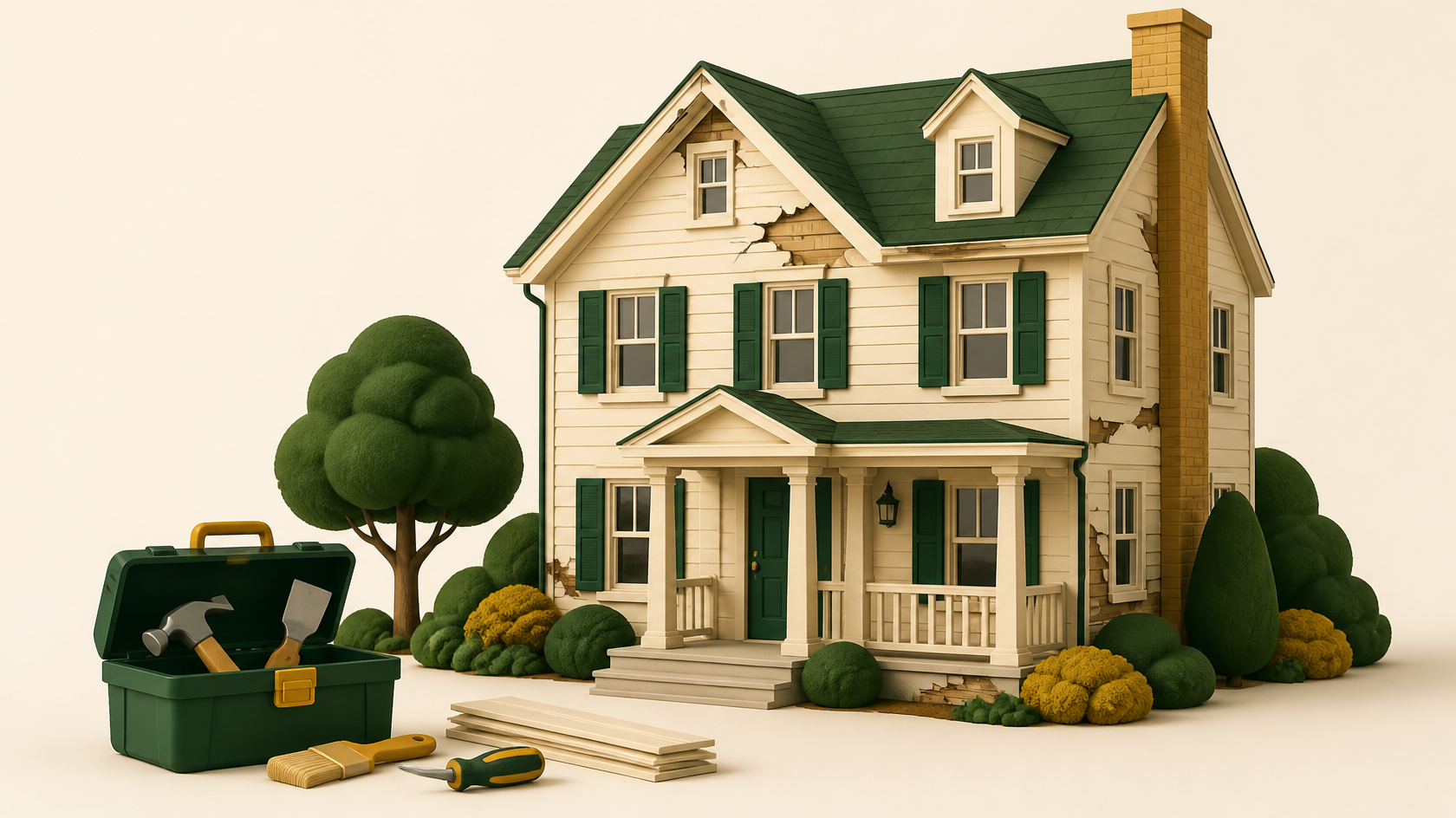
Is It Worth Repairing a House With Major Damage Before Selling?
It depends on the type of damage, the cost of repairs, and what buyers are willing to pay for the property in its current condition.
Some repairs can make a home more appealing and easier to finance. Others require a substantial investment without guaranteeing a higher sale price that covers the expense.
For example, repairing an active roof leak may help prevent further damage and address a major buyer concern. However, a complete kitchen renovation or extensive foundation project may not be financially worthwhile if you plan to sell soon.
For homeowners in Rhode Island, Massachusetts, and Connecticut, the decision should be based on the property's condition, comparable sales, local buyer demand, and the amount of money you can reasonably invest before selling.
Before committing to a major project, ask a real estate professional to help estimate the property's likely market value in its current condition and after the proposed repairs.
The goal is not necessarily to sell the house for the highest possible price. It is to determine which option is likely to leave you in the strongest financial position after expenses.
Which Repairs Should You Prioritize Before Listing?
Not every problem needs to be fixed before a home goes on the market. Prioritize repairs by considering safety, the risk of additional damage, buyer concerns, and the potential effect on financing.
Safety and Structural Problems
Issues involving the foundation, damaged structural components, unsafe stairs, exposed wiring, or other serious hazards deserve careful attention.
You may not need to complete every major project before selling, but you should understand the extent of the problem and how it affects the property's condition. A qualified contractor, structural engineer, electrician, or other specialist may be needed to evaluate specific concerns.
Some buyers may be willing to take on extensive work, while others may not have the budget or experience to proceed.
Roof Leaks and Water Damage
A leaking roof, recurring basement moisture, or water damage can concern buyers because the visible damage may not reveal the full extent of the problem.
If repairs are affordable, addressing the source of the moisture may help prevent further deterioration. If you decide not to repair it, gather any available estimates and records and accurately disclose known conditions as required.
Painting over stains or covering damaged areas without addressing the underlying issue can create problems during inspections and negotiations.
Heating, Plumbing, and Electrical Systems
Major system failures may limit the number of buyers who can comfortably purchase the property. They can also affect financing, insurance, and the buyer's ability to occupy the home.
Ask qualified professionals to assess the work needed and determine whether the system can be repaired or requires replacement. You can then compare the cost with the potential benefits of completing the work before listing.
Cosmetic Updates
Cosmetic improvements such as fresh paint, updated lighting, or basic cleanup may make a property easier to present without requiring a major investment.
However, cosmetic work should not take priority over serious safety issues or damage that could worsen. If the home needs extensive structural or mechanical repairs, buyers may care more about the property's overall condition than new finishes
How Do You Compare Repair Costs With Selling As-Is?
Before spending money on renovations, compare the financial outcome of repairing the property with the outcome of selling it in its current condition.
Start by getting written estimates for the most important repairs. For complicated projects, consider obtaining more than one estimate and asking whether permits, inspections, or additional work may be necessary.
Next, ask your real estate agent to estimate a reasonable selling-price range for the home as-is and after the proposed repairs. These are estimates, not guaranteed sale prices.
Consider this simplified example:
Estimated sale price as-is: $300,000
Estimated sale price after repairs: $340,000
Estimated repair costs: $25,000
Additional holding and related costs: $5,000
In this example, repairing the property could produce an estimated $10,000 more before accounting for any other differences in selling expenses or unexpected costs.
However, if repairs increase to $35,000 or take several additional months, the financial advantage could disappear.
Your comparison should account for:
Repair and contractor costs
Permits and inspection expenses, where applicable
Mortgage payments, property taxes, insurance, utilities, and maintenance while you wait
Potential additional damage or unexpected construction expenses
Selling expenses and the likely buyer pool
The time and effort required to manage the work
The highest estimated sale price does not automatically mean the best financial result. Focus on the expected net proceeds and the risks involved in reaching that outcome.
Can You Sell a House With Major Damage As-Is in Rhode Island?
Yes, a Rhode Island homeowner may be able to sell a property without completing major repairs first. An as-is sale can be an option if you do not have the funds, time, or desire to manage a renovation.
However, selling as-is does not mean the buyer must accept every condition without negotiation, nor does it eliminate applicable legal disclosure obligations.
Rhode Island General Laws § 5-20.8-2 generally requires sellers to provide a written disclosure of deficient conditions they actually know about before signing an agreement to transfer the property. The law specifically addresses conditions involving areas such as roofs, basements, and structural components. It also states that the disclosure is not a warranty that no other defects exist and does not impose a general duty on sellers to conduct inspections solely to complete the disclosure. <Cite refs={["turn113852search1","turn113852search3"]} />
You should accurately disclose known problems and consult a Rhode Island real estate attorney if you are uncertain about your obligations.
An as-is sale may appeal to renovation buyers or investors who are prepared to evaluate the property's condition. Traditional buyers may also consider the home, depending on its condition and their financing options.
Keep in mind that some mortgage programs have property-condition requirements. Major damage may prevent a buyer from obtaining certain types of financing, which can narrow the pool of potential buyers or affect the transaction timeline.
Your real estate agent can help you consider how to market the property, while your attorney can advise you about disclosures and contract terms.
How Can You Decide Which Selling Strategy Is Right for You?
The best strategy depends on your priorities, available resources, and the condition of the house.
Repair Before Listing
This may make sense when the damage is manageable, you have sufficient funds, and the expected improvement in marketability or sale price justifies the investment.
It may also help if the property's current condition would discourage many likely buyers or create avoidable financing difficulties.
Make Only Essential Repairs
A middle-ground approach is to address urgent safety issues or active damage while leaving larger renovations to the next owner.
This can help you avoid investing in an extensive remodel while still making the property easier to evaluate and market. The right balance depends on the specific home and what buyers in the area are likely to expect.
Sell As-Is
Selling as-is may be appropriate if you need to move quickly, cannot fund major repairs, inherited a property you do not want to renovate, or prefer to avoid coordinating contractors.
You should still establish a realistic asking price, prepare the required disclosures, and evaluate offers based on their terms and likelihood of closing—not just the proposed purchase price.
Before choosing, compare the expected net proceeds and timeline for each option. If you are selling in Rhode Island, a local comparative market analysis can help you understand how the property's condition may influence buyer interest.
Thinking about selling a house that needs major repairs? Alex Parmenidez can help you evaluate your options, understand local market conditions, and plan your next steps before you commit to expensive work.
Frequently Asked Questions
Do I have to repair major damage before selling my house in Rhode Island?
Not necessarily. You may be able to sell the home as-is, but applicable disclosure obligations still apply. Property condition may also affect the buyer pool, financing options, and negotiations.
Will I get more money if I repair my house before selling?
Possibly, but a higher sale price does not guarantee higher net proceeds. Compare repair costs, holding expenses, likely market value, and the possibility of unexpected work before deciding.
Which repairs matter most when selling a damaged house?
Safety issues, structural concerns, active leaks, and major heating, plumbing, or electrical problems deserve careful evaluation. The most worthwhile repairs depend on the property's condition and the expectations of likely buyers.
Can a buyer get a mortgage on a house that needs major repairs?
Sometimes. It depends on the damage, the lender, and the loan program. Significant safety or habitability concerns may prevent a property from meeting certain financing requirements, so buyers should discuss the home's condition with their lender.
How do I estimate whether repairing or selling as-is is better?
Obtain realistic repair estimates and compare the likely sale price and net proceeds under both scenarios. Include carrying costs, possible delays, and selling expenses, and discuss the property's condition with a local real estate professional before committing to major work.
Thinking about buying?
Let's talk through your numbers first.
A 30-minute call covers what you can afford comfortably, what taxes and insurance really cost in the town you're looking at, and which loan programs fit you. You work directly with Alex from the first call to closing.
Schedule a buyer callEnglish or Spanish · Call or text 401-426-4857 · Contact form
196 Waterman St, Providence, RI 02906 · C: (401) 426-4857 · O: (401) 351-2017 · [email protected] · alexparmenidez.realtor
Check out this article next

¿Debería Hacer Reparaciones Antes de Vender una Casa con Daños Importantes?
Making repairs before selling can help attract more buyers, but major renovations are not always worth the cost.
Read Article