
How Does Fall Weather Affect a Home Inspection?
TL;DR
Fall weather can actually make certain home inspection issues easier to identify. Cooler temperatures, rain, falling leaves, and changing weather conditions can reveal problems with heating systems, windows, insulation, drainage, roofs, gutters, and moisture that may not be as obvious during warmer, drier months. For buyers in Rhode Island and throughout Southern New England, a fall inspection is an opportunity to look beyond the home's appearance and understand how the property may perform as temperatures drop and winter approaches.
Cooler Temperatures Can Reveal Heating Problems
One of the biggest advantages of a fall home inspection is that cooler weather can provide a more realistic opportunity to evaluate the home's heating system. Depending on the outdoor temperature and the inspection conditions, an inspector may be able to observe how the heating system operates and whether different areas of the house appear to heat consistently.
Buyers should find out what type of heating system the property uses and ask about its age, maintenance history, and recent servicing. Rhode Island homes can have oil, natural gas, propane, electric, heat pumps, or multiple heating systems. The inspector can evaluate visible components and operation within the scope of the inspection, while specialized testing may be recommended for certain equipment.
Temperature differences inside the home can also provide useful clues. If one bedroom feels considerably colder than the rest of the house, for example, the cause could involve windows, insulation, ductwork, air leakage, or the heating system itself. That does not automatically mean there is a major defect, but it is worth investigating before purchasing the property.
Rain and Fall Moisture Can Reveal Drainage Issues
Fall rain can make drainage problems easier to notice. During or shortly after wet weather, an inspector may have a better opportunity to observe how water moves around the property, although the conditions on inspection day will determine what can actually be evaluated.
Buyers should pay attention to gutters, downspouts, grading, foundation areas, basement walls, and low sections of the yard. Water should generally be directed away from the foundation rather than allowed to collect alongside the house.
Inside, look for signs of previous moisture intrusion, including staining, discoloration, peeling materials, musty odors, or evidence of repairs. Basements and crawl spaces deserve particular attention because water problems can sometimes be seasonal or difficult to identify during dry conditions.
This is especially relevant in older Rhode Island properties, where foundation construction, grading, drainage systems, and previous modifications can vary significantly from one home to another.
An inspector may identify evidence that warrants further evaluation, but buyers should remember that a home inspection is not designed to predict every future water event. If there are concerns about drainage or recurring water intrusion, additional evaluation by an appropriate specialist may be recommended.
Leaves Can Affect Roofs, Gutters, and Exterior Inspection
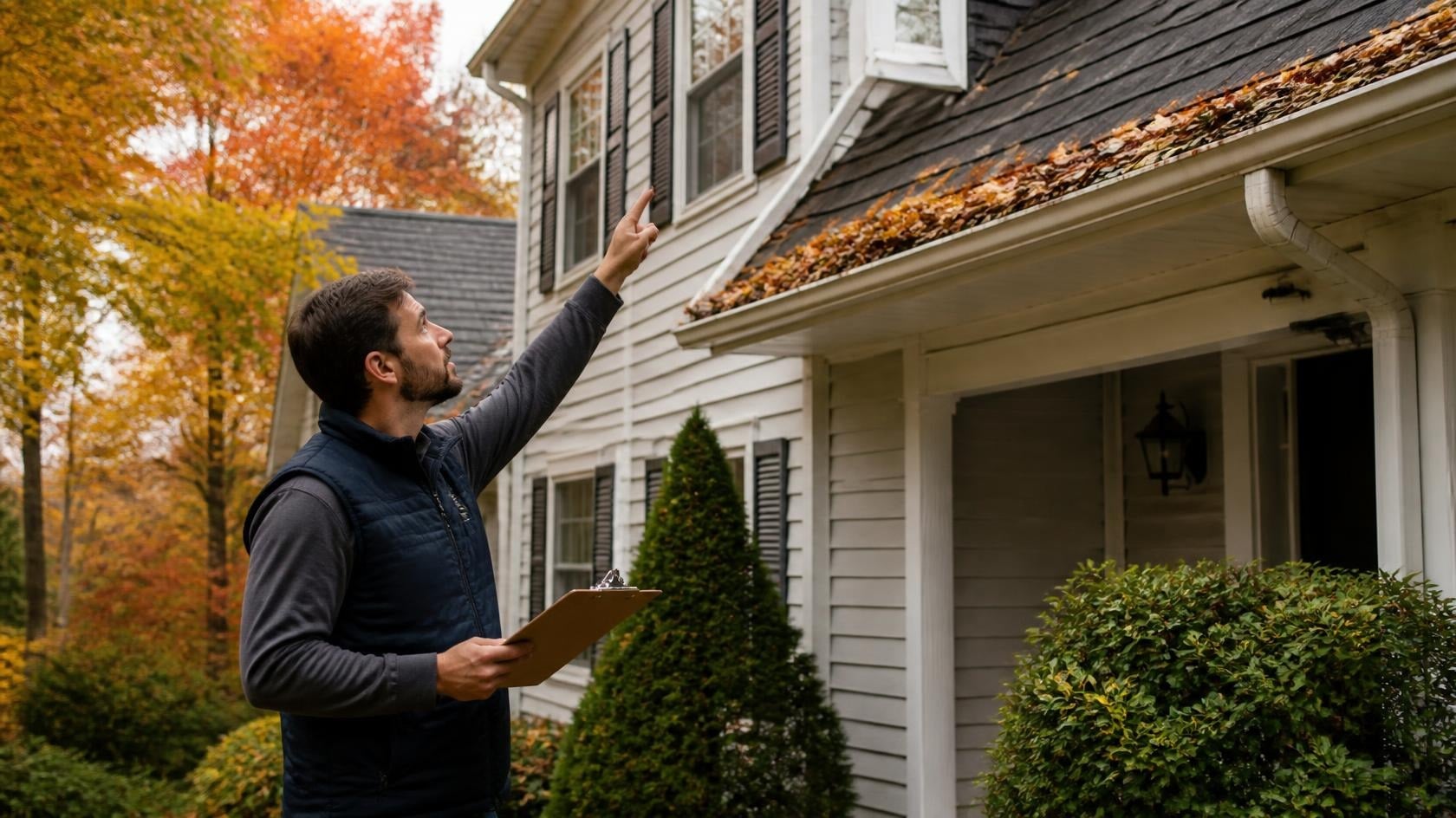
Falling leaves are a normal part of autumn in New England, but they can also create temporary conditions that buyers should understand. Leaves and debris can accumulate in gutters, around roof drainage areas, and near exterior drains.
During a fall inspection, the inspector may identify clogged or partially obstructed gutters and downspouts. The condition should be evaluated in context because some debris may simply be the result of the current season, while persistent buildup can contribute to drainage problems if it is not maintained.
The roof should also receive careful attention. Depending on the property's design and inspection conditions, the inspector may evaluate visible roofing materials for signs of damage, deterioration, missing components, or other concerns. However, leaves or other debris can sometimes obscure portions of the roof.
Buyers should ask about the roof's age and maintenance history and review any available documentation. A roof does not necessarily need to be replaced simply because it is older, but its remaining condition and expected maintenance should be considered when evaluating the overall cost of homeownership.
Exterior areas such as siding, trim, decks, porches, stairs, and railings should also be examined. Fall is a good reminder that seasonal maintenance can become an ongoing part of owning a home.
Windows, Doors, and Insulation Matter More as Temperatures Drop
A fall inspection can also draw attention to the home's windows and exterior doors. As outdoor temperatures become cooler, drafts and temperature differences may become more noticeable.
Inspectors can look for visible deficiencies involving windows and doors, including damaged frames, deteriorated components, failed seals, or problems with operation. Buyers should also pay attention to how easily windows open and close and whether exterior doors appear to seal properly.
Insulation is another important consideration. An inspection may identify areas where insulation is missing, insufficient, or visibly compromised, although an inspector cannot always see insulation throughout a finished home.
These details matter because energy efficiency is not simply about the age of the furnace or boiler. Heat loss can also be affected by windows, doors, insulation, air leakage, and the home's overall construction.
For buyers comparing homes in Rhode Island, Massachusetts, or Connecticut, these differences can become especially noticeable during the colder months. Two homes with similar purchase prices may have very different maintenance and energy requirements.
What Should Buyers Do When Weather Limits the Inspection?
Weather can sometimes prevent an inspector from fully evaluating certain parts of a property. Heavy rain, snow, wet surfaces, unsafe conditions, or limited visibility can affect access to roofs, exterior areas, drainage features, or other components.
That does not necessarily mean the inspection is inadequate. Instead, buyers should ask what areas were inspected, what areas could not be evaluated, and whether any limitations are documented in the inspection report.
If an important component could not be inspected because of weather or accessibility, the buyer may want to discuss whether a follow-up inspection or additional evaluation is appropriate. Depending on the situation, this could be particularly important for roofs, drainage, exterior structures, chimneys, septic-related components, or other areas that require specialized inspection.
Buyers should also avoid treating the inspection report as a simple pass-or-fail document. A home inspection is intended to provide information about the property's observed condition. The report can help buyers understand which items may require routine maintenance, which deserve further investigation, and which could involve significant future costs.
For a fall home purchase, that information can be especially valuable because winter may be only weeks away. Understanding the home's heating, water management, exterior condition, and maintenance needs before closing can help buyers plan more effectively.
Frequently Asked Questions
Is fall a good time to have a home inspection?
Yes. Fall weather can provide useful conditions for identifying issues involving heating, drafts, moisture, drainage, windows, and winter preparation. However, the inspection's effectiveness will depend on the property's condition and the weather on the inspection date.
Can an inspector test the heating system during a fall inspection?
An inspector will generally evaluate the heating system within the scope and limitations of a standard home inspection, including visible components and operation when conditions permit. Specialized testing or evaluation may be recommended for certain systems or concerns.
Does rain make a home inspection more useful?
Rain can sometimes make drainage or water-intrusion issues easier to observe, but it does not guarantee that every moisture problem will be visible. Buyers should discuss any signs of water intrusion with the inspector and consider additional evaluation when appropriate.
Can bad weather prevent part of a home from being inspected?
Yes. Weather, safety concerns, accessibility, or other conditions can prevent an inspector from evaluating certain areas. Buyers should review the inspection report for limitations and ask whether a follow-up inspection is recommended.
What should buyers pay special attention to during a fall inspection?
Buyers should pay particular attention to the heating system, windows and doors, roof and gutters, drainage, basement moisture, insulation, exterior structures, and any signs that the property may require winter-related maintenance.
If you're considering buying a home this fall, Alex Parmenidez can help you understand the questions to ask during showings and inspections and navigate the process from offer through closing.
Thinking about buying?
Let's talk through your numbers first.
A 30-minute call covers what you can afford comfortably, what taxes and insurance really cost in the town you're looking at, and which loan programs fit you. You work directly with Alex from the first call to closing.
Schedule a buyer callEnglish or Spanish · Call or text 401-426-4857 · Contact form
196 Waterman St, Providence, RI 02906 · C: (401) 426-4857 · O: (401) 351-2017 · [email protected] · alexparmenidez.realtor
Check out this article next
¿Cómo Afecta el Clima de Otoño a una Inspección de la Vivienda?
Fall weather can actually make certain home inspection issues easier to identify. Cooler temperatures, rain, falling leaves, and changing weather conditions can reveal problems
Read Article