
Should You Buy a Home with Solar Panels? Pros and Cons Explained
TL;DR
Solar panels are usually a smart benefit for homebuyers but only when they’re owned outright. Leased systems can create financing challenges, long-term obligations, and potential delays during closing.
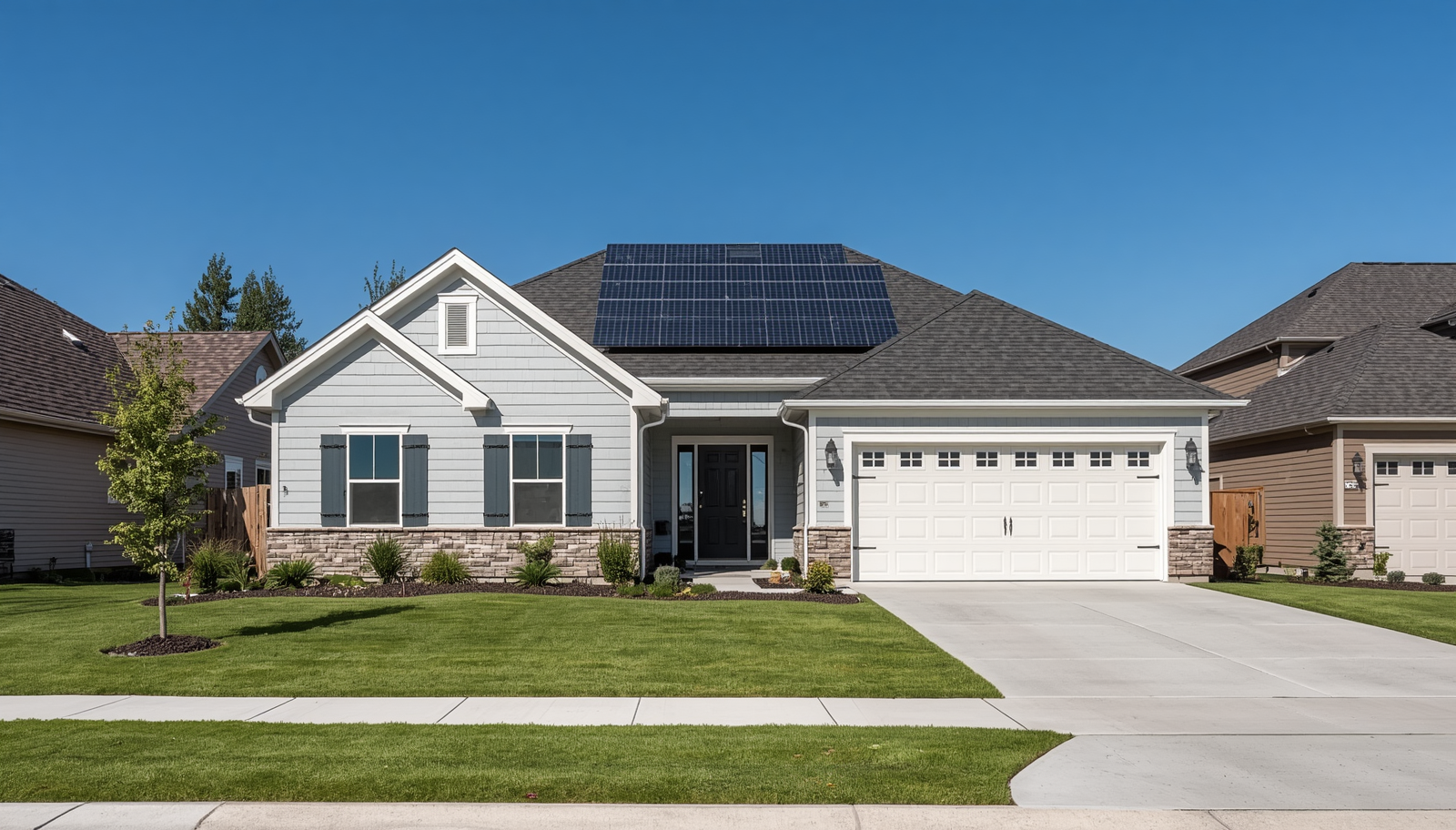
The First Question to Ask: Owned or Leased?
Before you evaluate savings or value, you need to answer one critical question: who owns the solar panels?
This single factor shapes everything from financing to resale value.
Owned panels transfer with the property at closing and come with no ongoing payments to a third party. You inherit the energy savings and potential added value.
Leased panels, on the other hand, stay tied to the solar company. You may need to assume a long-term contract, negotiate a buyout, or risk complications that could delay or even derail the transaction.
Always get this information in writing before making an offer.
The Pros of Buying a Home with Solar Panels
- Lower Monthly Energy Bills:
Solar panels reduce or eliminate dependence on the utility grid. In Massachusetts, electricity rates from Eversource regularly exceed $0.28 per kilowatt-hour, among the highest in the country. A fully owned production system can cut several hundred dollars off your annual bill. Buyers in Rhode Island and Connecticut see similar savings through National Grid and Eversource, where rates have trended upward consistently over the past decade.
- Added Home Value:
Research from Lawrence Berkeley National Laboratory found that buyers consistently paid a premium for homes with owned solar systems, roughly $4 per watt of installed capacity. On a typical 8 kW residential system, that translates to approximately $32,000 in added value. Appraisers across RI, MA, and CT are increasingly comfortable accounting for solar, particularly in markets where utility costs are high and comparable solar-equipped sales exist.
- Active State Incentive Programs:
All three states in Alex’s service area have solar support programs that may benefit you as the new owner:
- Rhode Island: Net metering is available through National Grid. The Renewable Energy Growth (REG) program allows qualifying systems to receive payments for power exported to the grid.
- Massachusetts: The SMART program (Solar Massachusetts Renewable Target) provides incentive payments based on solar production. The state also offers a 15% personal income tax credit for solar installations, capped at $1,000.
- Connecticut: Net metering is available through Eversource and United Illuminating. The Residential Solar Investment Program supports adoption through additional incentives.
When buying a home with owned panels, confirm with the seller which programs the system is enrolled in and whether those benefits transfer at closing.
- Protection Against Future Rate Increases:
Electricity rates in New England trend higher over time. Owning a producing solar system provides a degree of insulation against future utility increases, a practical benefit that compounds over a 10- or 20-year ownership horizon.
The Cons Buyers Should Consider
- Leased Systems Add Complexity:
If the panels are leased, you'll be asked to assume the solar lease as a condition of the sale. Most leases run 20 to 25 years, with a fixed or escalating monthly payment owed to the solar company regardless of system performance.
Some lenders, particularly FHA and VA loan programs, treat an assumed solar lease as a lien on the property, which can affect your debt-to-income ratio or complicate loan approval. Always disclose a solar lease to your lender before going under contract. Surprises at the closing table are avoidable if you address this early.
- Roof Condition Becomes More Expensive to Address:
Replacing a roof under an active solar installation costs significantly more than a standard reroof. The panels must be removed, stored, and reinstalled, typically adding $1,000 to $3,000 or more on top of the roofing work itself. If the home has an aging roof, factor this into your offer and request a dedicated roof inspection before finalizing the purchase.
- Warranties and Maintenance Transfer to You:
Owned systems typically come with a 25-year panel warranty and a shorter inverter warranty (often 10 to 12 years). When you buy the home, those warranties transfer — but so does the maintenance responsibility. Ask the seller for complete documentation of all warranties, the installation company, and any service history.
- Appraisal Gaps Are Possible:
In certain price ranges or neighborhoods with limited solar-equipped comparable sales, an appraiser may not fully capture the value of the system. This can create an appraisal gap on a higher-priced home, requiring you to cover the difference out of pocket or renegotiate the contract price.
Owned vs. Leased Solar: Key Differences
| Factor | Owned Solar | Leased Solar |
|---|---|---|
| Ownership at closing | Transfers to buyer | Remains with solar company |
| Transfer process | Simple — no third party | Requires lease assumption or seller buyout |
| Energy savings | Full savings go to buyer | Shared per lease terms |
| Home value impact | Positive — added to appraised value | Minimal — leased equipment excluded |
| Financing risk | Low | Can complicate FHA/VA loans |
| Ongoing obligations | None — system is yours outright | Monthly payment for 20–25 years |
What to Ask Before Making an Offer
Before writing an offer on a home with solar, request written answers to these six questions:
- Are the panels owned outright or under a lease or PPA?
- If leased: what is the remaining contract term, and what is the monthly payment?
- What is the system size (kilowatts) and average annual production?
- How old are the panels, and are they under active warranty?
- What is the approximate remaining life of the roof?
- Is there documentation of the installation, warranties, and any service history?
Your agent should make these disclosures a condition of the accepted offer. If a lease is involved, loop in your lender immediately before the inspection period begins.
Frequently Asked Questions
Q: Do solar panels increase home value?
A: Yes, owned solar panels typically increase home value because they reduce energy costs and are considered a permanent improvement.
Q: What is the difference between owned and leased solar panels?
A: Owned panels transfer with the property and provide full benefits, while leased panels require you to take over a contract with monthly payments. If you want to explore how this applies to specific homes, you can find more details on my website.
Q: Can solar panels affect the mortgage process?
A: Yes, especially if the system is leased. Some loan programs may treat leases as liabilities, which can impact approval. Disclosing this early helps avoid delays.
Q: Can I assume a solar lease when buying a home?
A: In most cases, yes, but approval from the solar company is required and the process can take time. If you’d like guidance through this process, you can explore resources on my site.
Q: Are solar incentives transferable to new homeowners?
A: Some incentives transfer with the system, while others remain with the original owner. It’s important to verify program details before closing.
Check out this article next
Unlocking Flexibility: A Simple Guide to HELOCs in RI
A HELOC (Home Equity Line of Credit) allows you to access that equity without refinancing your primary mortgage.
Read ArticleThinking about buying?
Let's talk through your numbers first.
A 30-minute call covers what you can afford comfortably, what taxes and insurance really cost in the town you're looking at, and which loan programs fit you. You work directly with Alex from the first call to closing.
Schedule a buyer callEnglish or Spanish · Call or text 401-426-4857 · Contact form
196 Waterman St, Providence, RI 02906 · C: (401) 426-4857 · O: (401) 351-2017 · [email protected] · alexparmenidez.realtor