
RI Slab Foundations: Pros & Cons
TL;DR
Slab foundation homes can offer lower maintenance and cost advantages, but in Rhode Island’s climate, buyers should carefully evaluate insulation, plumbing access, and long-term resale considerations before purchasing.
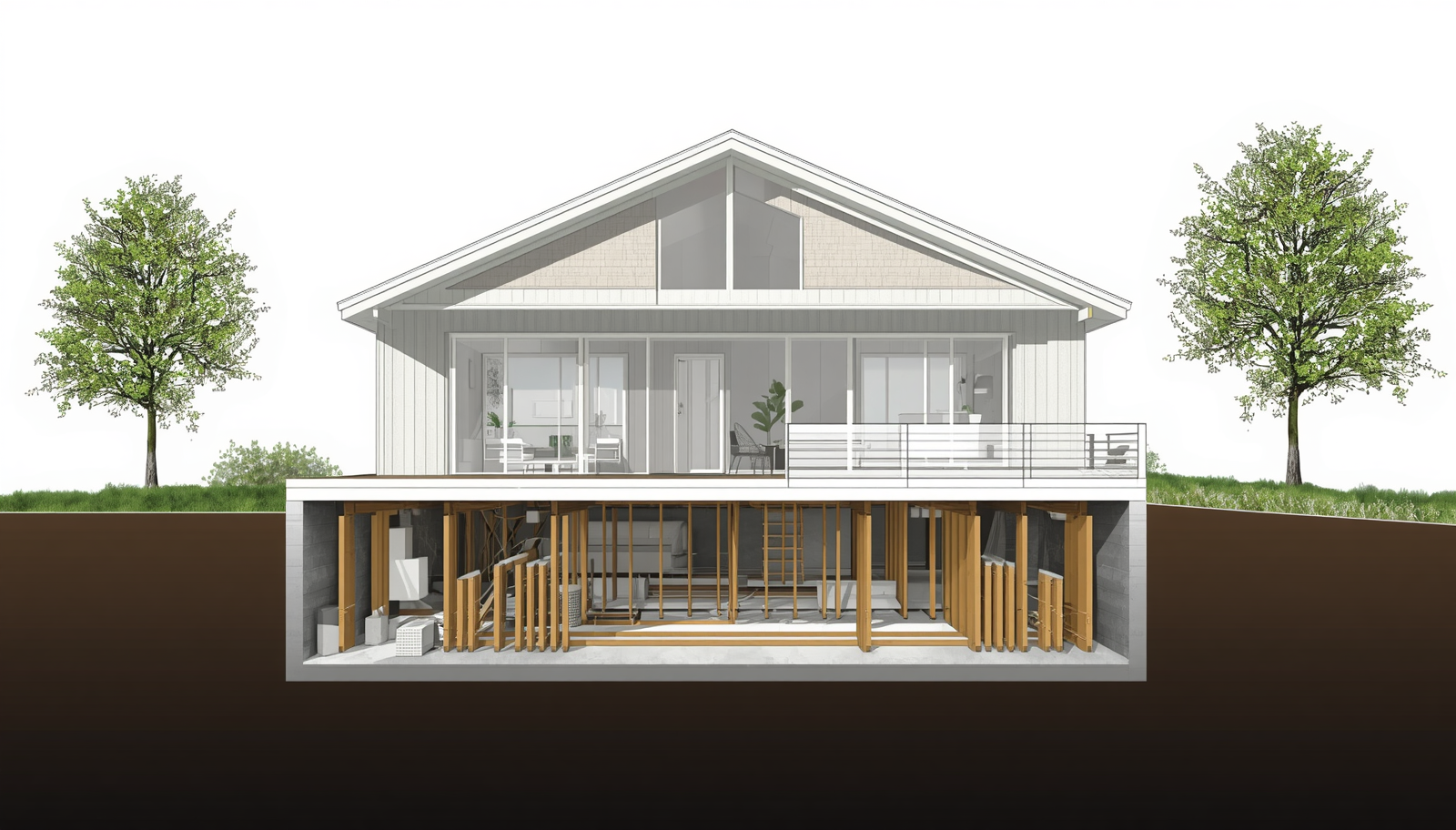
What Is a Slab Foundation?
A slab foundation is a solid layer of concrete poured directly on the ground, with no basement or crawlspace underneath. Plumbing and sometimes heating systems run through or below the slab.
In Rhode Island, most homes traditionally have basements due to the region’s climate and older housing stock. However, slab foundations are still common in newer construction, mid-century ranch homes, condos, and certain coastal properties.
Why Slab Foundations Are Less Common in Rhode Island
The majority of homes in Rhode Island—especially in areas like Providence, Cranston, and Warwick—feature basements. This is largely due to:
- Cold winters and freeze-thaw cycles
- Soil conditions
- Historical building practices
Because of this, slab homes are often viewed differently in the local market, particularly when it comes to resale expectations.
The Pros of Slab Foundation Homes
Slab homes can offer several advantages, especially depending on your goals and budget.
- Lower upfront cost: Typically less expensive to build than homes with basements
- Less maintenance risk: No basement means no flooding, sump pumps, or mold concerns
- Faster construction: Common in new builds with shorter timelines
- Accessibility: Easier entry with fewer stairs, ideal for long-term living
- Fewer pest issues: Limited below-ground access points
For buyers prioritizing simplicity and lower maintenance, these benefits can be appealing.
The Cons Buyers Should Consider
While slab homes offer advantages, there are also important trade-offs.
- No storage or expansion space: No basement means less flexibility
- Plumbing access challenges: Repairs may require cutting into the concrete
- Insulation concerns: Older slab homes may feel colder and cost more to heat
- Flood considerations: Particularly important in coastal or low-lying areas
- Resale differences: Basements are standard in Rhode Island, which can affect buyer expectations
These factors should be carefully weighed when comparing properties.
What to Check Before Buying a Slab Home
Understanding how slab homes compare to traditional basement homes can help guide your decision.
Slab Foundation
- Lower cost
- Minimal maintenance
- Limited storage
- Harder plumbing access
Basement Foundation
- Higher cost
- More storage and expansion potential
- Easier access to systems
- Higher risk of moisture issues
Each option has trade-offs depending on your lifestyle and long-term plans.
Slab vs. Basement: Key Differences
| Factor | Slab Foundation | Full Basement |
|---|---|---|
| Typical in RI | Newer builds, ranches, condos | Most homes statewide |
| Upfront cost | Lower | Higher |
| Storage / expansion | None | Significant |
| Plumbing repairs | Expensive | Accessible |
| Flooding risk | Lower (if graded well) | Higher |
| Resale positioning | Below market norm | Matches market norm |
Should You Buy a Slab Foundation Home?
The right answer depends on the specific property, price, and your needs.
A well-built slab home in a strong location can be a smart purchase—especially for buyers looking for lower upfront costs and simpler maintenance. However, poorly insulated slabs or properties in flood-prone areas may require additional consideration.
As with any real estate decision, evaluating the full picture—including condition, location, and long-term value—is key.
Frequently Asked Questions
Q: Are slab foundation homes a good option in Rhode Island’s climate?
A: Yes, they can be, as long as they are properly insulated and built to handle freeze-thaw conditions. Older slab homes without these features may be less efficient.
Q: Do slab homes sell for less than homes with basements?
A: In many cases, yes, because basements add usable space and storage. If you’d like to compare home values in your area, you can explore more insights on my website.
Q: How can I tell if a home has a slab foundation?
A: Listings usually specify the foundation type, but you can also confirm during a showing by checking for the absence of a basement or crawlspace.
Q: Is it expensive to repair plumbing in a slab home?
A: It can be more expensive than in homes with basements, since repairs may require accessing pipes beneath the concrete. If you want help evaluating a property’s condition, you can find more resources on my site.
Q: Should I avoid buying a slab foundation home?
A: Not necessarily. It depends on the home’s condition, location, and price. Slab homes can be a great fit for some buyers, especially those prioritizing simplicity and lower maintenance.
By Alex Parmenidez, Broker Associate | Coldwell Banker Realty
Alex Parmenidez | Broker Associate Licensed in RI, CT, & MA | Coldwell Banker Realty
196 Waterman St, Providence, RI 02906
C: (401) 426-4825 | O: (401) 351-2017
Check out this article next

¿Es Suerte o Oportunidad? La Verdad Detrás de Comprar Casa
Es común escuchar frases como: “Tuviste suerte de comprar en ese momento” o “Ojalá hubiera comprado cuando los precios estaban más bajos”. Sin embargo, en…
Read Article