
What Should Rhode Island Sellers Know About Liens on a Property?
TL;DR
A property lien is a legal claim against real estate because of an unpaid debt or obligation. In Rhode Island, liens can affect your ability to sell, transfer clear title, and receive your expected proceeds. Identifying liens early gives you time to confirm the amounts owed, arrange payment or settlement, and work with your closing attorney to resolve title issues.
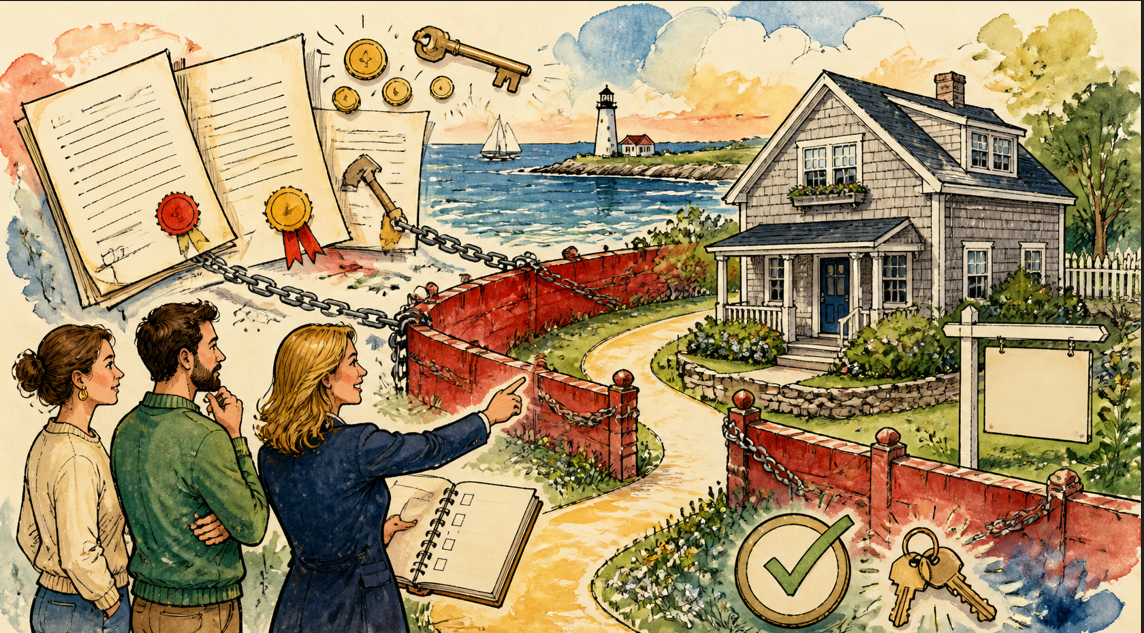
What Is a Property Lien, and How Can It Affect a Home Sale?
A property lien is a legal claim against real estate that may secure payment of a debt. Depending on the type of lien and applicable law, it can arise from unpaid taxes, construction work, a court judgment, or another financial obligation.
For Rhode Island homeowners, a lien can become an important issue when preparing to sell. Buyers and their lenders generally want confidence that the property can be transferred with the title protections required for the transaction.
If a title search identifies an unresolved lien, the closing attorney may need to determine its validity, the amount owed, and the steps necessary to address it before the sale can proceed.
A lien does not automatically mean you cannot sell your home. Many liens can be resolved during the closing process, but the details depend on the claim, its priority, and the parties involved.
For example, imagine you plan to sell your Providence home for $400,000 but discover an outstanding lien related to unpaid taxes or a contractor dispute. You may still be able to complete the sale, but the lien must be evaluated and an acceptable resolution arranged.
The most important step is to identify potential liens before your closing date approaches. Early preparation can help reduce unexpected delays and make it easier to estimate how much money you will receive from the sale.
What Types of Liens Can Affect Rhode Island Property Sellers?
Not all liens work the same way. Understanding the possible source of a claim can help you determine which records and documents to gather.
Property Tax Liens
Unpaid property taxes can create a lien against real estate in Rhode Island. State law addresses tax liens in Rhode Island General Laws § 44-9-1, including their attachment and priority.
Outstanding taxes, interest, penalties, and related charges may need to be addressed as part of a sale. Sellers should contact the appropriate municipal tax collector to verify the balance and ask about the process for obtaining updated tax information.
You can review the Rhode Island tax lien statute for more information.
Mechanic's Liens
A mechanic's lien may arise from qualifying labor, services, or materials provided for construction, improvement, or repair work when payment obligations have not been met.
For example, if you renovated your kitchen but a contractor or another qualifying party claims payment is still outstanding, that dispute could affect your property's title.
Rhode Island has specific laws governing mechanic's liens, including requirements and procedures that depend on the circumstances. If a contractor threatens to file or has already filed a lien, consult a Rhode Island real estate attorney promptly rather than assuming the claim will disappear when you sell.
Judgment Liens and Other Court-Related Claims
Certain court judgments or legal proceedings may result in claims that affect real estate. The impact depends on the judgment, the applicable law, and whether the claim has been properly recorded or attached to the property.
If you have an unresolved lawsuit, debt collection matter, or judgment, tell your closing attorney early so the title review can identify any potential issue.
Mortgage Liens and Other Recorded Claims
A mortgage generally creates a lien securing repayment of the loan. This is a normal part of homeownership and is typically addressed when a property is sold.
The closing attorney obtains the mortgage payoff information, coordinates payment from the sale proceeds, and handles the required release or discharge process.
Other recorded claims may also appear in a title search. Each one must be evaluated individually to determine whether it affects the transaction and what documentation is needed to resolve it.
How Do Liens Affect Your Sale Proceeds and Closing Timeline?
A lien can affect both the amount of money you receive and how quickly your home sale closes.
When a property sells, the closing attorney typically prepares a settlement statement showing the sale price, mortgage payoffs, agreed closing costs, applicable taxes, and other adjustments. If a lien must be paid or settled, that obligation may reduce the seller's net proceeds.
Consider a simplified example:
Sale price: $400,000
Mortgage payoff: $250,000
Other selling costs: $25,000
Lien to be paid at closing: $10,000
Estimated proceeds after these items: $115,000
These figures are illustrative only and do not include every possible fee, adjustment, or obligation. The actual amount depends on your mortgage balance, closing expenses, the lien's terms, and other transaction details.
A lien can also delay closing if the amount is disputed, the creditor cannot be reached, the payoff statement is incomplete, or the required release documents are unavailable.
In some cases, a creditor may agree to a settlement or another arrangement. However, sellers should not assume a lien will be removed simply because a payment has been made. The closing attorney should confirm the appropriate procedure and documentation for clearing the title.
What Should You Do if You Discover a Lien Before Selling?
Finding a lien can be stressful, especially when you already have a buyer or are preparing to list your home. Taking a structured approach can help you understand your options.
1. Obtain a Title Review
Ask your real estate attorney or title professional to review the relevant land records and identify the claim. A title review can help establish who filed the lien, when it was recorded, and what documentation may be needed to address it.
Do not rely solely on old paperwork or your recollection of a debt. The recorded information and current payoff details matter.
2. Verify the Amount Owed
Contact the creditor, municipality, contractor, or other party associated with the claim. Request a current written balance and ask whether interest, penalties, legal fees, or other charges have accrued.
If you believe the lien is incorrect, gather supporting documents and discuss the dispute with your attorney before agreeing to pay it.
3. Discuss Your Resolution Options
Depending on the circumstances, possible solutions may include paying the balance, negotiating a settlement, correcting a recording error, disputing an invalid claim, or arranging an approved payoff through closing.
Your attorney can explain which options are legally available and whether the proposed resolution will satisfy the requirements for transferring title.
4. Coordinate With Your Closing Team
Tell your real estate agent and closing attorney about the issue as early as possible. If you already have a purchase agreement, your team can help determine whether the lien may affect your closing schedule and what communications or extensions may be necessary.
Do not promise a buyer that the lien will be cleared by a particular date until the responsible professionals have confirmed the plan.
How Can Rhode Island Sellers Prevent Lien Problems Before Listing?
You do not have to wait until a buyer is under contract to investigate possible title issues. Preparing before listing can give you more time to resolve problems without unnecessary pressure.
Start by gathering mortgage statements, records of completed renovation work, tax payment information, and documents related to any past legal or financial disputes involving the property.
If you have recently completed construction or remodeling, keep invoices, receipts, payment confirmations, and any releases or other documentation you received from contractors. These records can help your attorney evaluate questions about outstanding payment claims.
It is also useful to request information about unpaid municipal charges or other obligations that could affect the transaction. The exact records required will depend on the property and the type of claim involved.
Most importantly, involve a qualified Rhode Island real estate attorney if you discover a lien or suspect that one may exist. Some claims involve strict legal procedures, disputed balances, or priority questions that cannot be resolved by simply paying the amount mentioned in a letter.
If you are preparing to sell a home in Providence, Warwick, Cranston, or another Rhode Island community, addressing potential title problems early can help you plan your sale with greater confidence.
Thinking about selling your Rhode Island home? Alex Parmenidez can help you understand the selling process, prepare for the next steps, and coordinate with the appropriate professionals as you get ready for closing.
Frequently Asked Questions
Can I sell my Rhode Island home if there is a lien on it?
Possibly. A lien does not automatically prevent a sale, but the claim may need to be paid, settled, challenged, or otherwise resolved to satisfy the title and closing requirements.
Will a property lien reduce the money I receive from selling my home?
It can. If the lien must be paid from your sale proceeds, the amount available to you may decrease. Your closing attorney can help calculate your estimated proceeds after applicable payoffs and costs.
How do I find out if there is a lien on my property in Rhode Island?
A title search and review of the relevant municipal land evidence records can help identify recorded claims. Your closing attorney or title professional can advise you on the appropriate search and any additional records that may need to be checked.
What happens if I dispute a lien filed against my property?
Gather the relevant contracts, invoices, receipts, correspondence, and payment records, then consult a Rhode Island real estate attorney. The appropriate response depends on the type of lien, the facts, and the legal procedures that apply.
Should I resolve a property lien before listing my home?
When possible, investigating and resolving liens before listing can reduce uncertainty and help prevent closing delays. Even if the lien will be handled at closing, identifying it early gives your attorney more time to coordinate the necessary steps.
Thinking about buying?
Let's talk through your numbers first.
A 30-minute call covers what you can afford comfortably, what taxes and insurance really cost in the town you're looking at, and which loan programs fit you. You work directly with Alex from the first call to closing.
Schedule a buyer callEnglish or Spanish · Call or text 401-426-4857 · Contact form
196 Waterman St, Providence, RI 02906 · C: (401) 426-4857 · O: (401) 351-2017 · [email protected] · alexparmenidez.realtor
Check out this article next
¿Qué Deben Saber los Vendedores de Rhode Island Sobre los Gravámenes de una Propiedad?
Un gravamen sobre una propiedad es un reclamo legal sobre un inmueble debido a una deuda u obligación pendiente de pago
Read Article