
3 Mistakes That Almost Blew Up a 3-Family Investment Purchase in Rhode Island (Julio's Real Story)
Quick Answer
Published September 2026 · Central Falls and Pawtucket, RI
What are the most common mistakes when buying an investment property in Rhode Island? Relying on a single lender, not quoting investment-property insurance before you offer, and not requiring tenant security deposits in writing. All three happened to Julio Palacios in one purchase, and all three are avoidable. How do you buy without regretting it? You buy on numbers, not emotion. Julio Palacios had just finished paying off the home he lives in, decided to invest in a 3-family close to his daily life in the Central Falls–Pawtucket area, and closed after months of touring homes, losing offers, and solving three surprises: a lender who did not deliver what was promised, insurance quotes nearly double what he expected, and a tenant security deposit that never made it to closing.
- Rent has to cover the mortgage from month one. Julio passed on cheaper homes because they needed months of repairs before they could rent. For you: calculate how long you go without income and whether your budget can carry it.
- One lender is a risk. The promised rate was not the offered rate. For you: have two lenders competing from the start, not once you are under contract.
- Investment property insurance costs more than your home's. Julio's quotes came in at nearly double. For you: get insurance quotes before you make the offer, not after.
- Tenant deposits must transfer at closing. A communication breakdown left the new owner without the deposit and with frustrated tenants. For you: require deposit amounts and their transfer in writing.

Why Did Julio Decide to Buy a Second Home as an Investment?
This was not an impulse purchase. Julio finished paying off the mortgage on the home he lives in, and only then started thinking about putting his money into another property. In his words, the benefit is clear: someone else pays the mortgage, the rent covers the taxes, the home gains value over time, and there is still income left over each month.
There are many investment vehicles. Julio chose a multifamily because he wanted to keep the rental income and grow his net worth step by step, with something he can see, touch, and control.
What this changes for you: if you are considering an investment property, start with your own financial position. Julio bought from a position of strength, with no mortgage on his residence and reserve funds in place. That let him say no to several homes without pressure.
Why Rhode Island, and Why Close to Home?
Julio could have bought in Massachusetts or Connecticut. He chose Rhode Island, and specifically the Central Falls–Pawtucket area, for a practical reason: control. He will manage the property himself, maybe with some help, but he wants to be there in minutes if there is an emergency, not drive hundreds of miles.
We met at a 3-family in Woonsocket. After seeing it together, the conversation shifted: not "I want to buy because I want to invest," but "where does this make sense for my life?" That distinction, between buying on desire and buying with structure, is the difference between an investment and a headache.
What this changes for you: define your driving radius before you start searching. A property you cannot attend to personally will cost you in management, in time, or both.
If you want to see how these two markets are moving before you decide, the detail is on the site: my Pawtucket guide and Central Falls guide cover prices, taxes, and housing type for each city; my appraiser-style CMA for a Pawtucket investment property shows exactly how I run the numbers Julio and I ran together; and the bilingual guide to buying in Central Falls explains why that city's median is really a multifamily number.
The Frustration of Seeing So Many Homes
Julio said it plainly: the hardest part was the frustration. Seeing so many homes, in so many places, and having one after another not work out.
The pattern repeated. The house looked perfect, the price seemed fine, and then he sat down to run the numbers and they did not add up. Sometimes it was the price against expected rent. Other times it was time: a lower-priced home that needed work and at least six months before it would produce rent. For Julio, on his second purchase, that wait was not acceptable. He needed a property that generated income immediately.
And then there were the lost offers. He would submit, and someone else would take it.
I compare it to batting: you swing, you miss, you keep swinging until the home run comes. The more you go out, the more numbers you run, the closer you are to the one that works. Julio persisted, and today he says he feels at peace because he made every effort to buy a property that gives him the numbers he wanted.
What this changes for you: every home you pass on with numbers is a lesson, not a loss. Have your formula ready (price, rent, expenses, time to first rent) and apply it the same way to every house.
Challenge 1: The Lender Who Did Not Deliver
Julio had a budget and a single bank. He trusted that person to give him a good rate based on his credit. It did not happen: the rate offered was much higher than he expected.
That is when Patricia Vargas stepped in. We negotiated, and Julio got what he wanted, the way he wanted it. But the scare was real, and it came under contract, when the clock was already running.
What this changes for you: never rely on a lender's verbal promise. Until you have a written Loan Estimate, you have nothing. Have a second lender comparing before you make the offer. In my experience, this is one of the things I see go wrong most often on investment purchases.
Challenge 2: Insurance at Nearly Double
Julio pays under $2,000 a year for the insurance on his home and expected something similar. The surprise: for an investment property, the quotes came in at nearly double. He shopped several places, and the number was still too high.
We worked on it together, quoted more options, and landed favorable coverage that fit within the numbers. But it was another fight that was not in the plan.
What this changes for you: insurance on a non-owner-occupied property almost always costs more than on your primary residence. Get quotes before you make the offer and build them into your cash-flow calculation. If insurance breaks the numbers, better to know before you sign.
Challenge 3: The Tenant Security Deposit
This is the lesson I most want you to remember. When we went to take possession, we discovered the previous owner had collected a security deposit from the tenants, but there was a language barrier and a dispute over that deposit. The result: the new owner did not receive the deposit, the tenants had expectations that were never made clear, and they started shooting the messenger, which was Julio.
Julio handled the conversation with the tenants transparently: this is what we have, this is what I received, here are my receipts. But the frustration showed, and it was something that should have been cleared up with the previous owner before closing.
What this changes for you: when you buy a property with tenants in place, require in writing (in the purchase and sale agreement) the amount of each security deposit, that they transfer at closing, and copies of the leases. And know why it matters so much: Rhode Island's security deposit statute (R.I. Gen. Laws § 34-18-19) says in subsection (g) that when a landlord transfers their interest in the premises, whoever holds that interest when the tenancy ends is bound by the same section. In plain terms: the new owner is the one who has to return the deposit when the tenant leaves, even if the previous owner kept it. The same statute caps the deposit at one month's rent and requires it to be returned within 20 days after the tenant delivers possession and provides a forwarding address. This is not legal advice; confirm it with your closing attorney before you sign. That is why it is called a closing: it is the moment to close the chapter with everything clear, so there are no surprises.
Buy the Potential, Not the Defects
Julio has a clear philosophy: if he focuses on what is wrong with a house, he never buys anything. He focuses on the potential. He knows he will have to put money into each unit to bring them to the standard he wants and to market level; exactly how much will be clear once the improvements are scoped.
Why invest in units that are already rented? Because you cannot charge market rent for an apartment that is not at market standard. As Julio puts it, nobody wants to feel taken advantage of. A tenant who feels they are getting fair value stays, pays on time, and takes care of the property.
What this changes for you: budget improvements from the start, unit by unit, and treat them as part of the purchase price, not a surprise expense.
What I Saw From My Side of the Table
After 14 years helping buyers across Rhode Island, Massachusetts, and Connecticut, these are the four things Julio did right, or nearly got wrong, that I would tell the next investor:
He paid off his home first. He bought without pressure, with reserves to cover a vacant unit without a problem. That let him buy on numbers, not emotion.
He walked away when the numbers did not work. He lost offers and passed on homes, but he never bought on impulse. The one he bought produces income from month one.
He almost relied on a single lender. The verbal promise did not hold. Having Patricia as a backup saved the closing.
He learned the deposit lesson. With existing tenants, deposits and leases must be in writing and transfer at closing. Period.
Next Steps If You Are Thinking About Your First Investment Property
- Check your foundation: is your residence stable, and do you have reserves for 2 to 3 months of mortgage without rent?
- Define your driving radius: how far are you willing to go to handle an emergency?
- Build your formula: price, current rent, expenses (taxes, investment insurance, maintenance), and time to first rent.
- Get pre-approvals from two lenders, with written Loan Estimates.
- Get investment-property insurance quotes before you offer.
- If the house has tenants, require leases, deposit amounts, and their transfer in the contract.
- Call me. We tour together, we run the numbers together, and I tell you the truth even when it is not what you want to hear.
Frequently Asked Questions
How much money do I need to buy an investment property in Rhode Island?
It depends on the financing. A conventional investment loan usually requires a larger down payment than a primary residence, and you need reserves to cover vacancies and repairs. Julio bought after paying off his residence and with enough funds to carry a vacant unit. Confirm exact requirements with your lender.
Why does insurance on an investment property cost more?
Insurers treat a non-owner-occupied property as higher risk and price it accordingly. Julio's quotes came in at nearly double what he pays on his residence. Get several quotes before you make an offer and build them into your numbers.
What happens to security deposits when I buy a home with tenants?
Deposits the tenants paid should transfer to the new owner at closing, and the amounts should be in writing in the purchase and sale agreement. Under Rhode Island law (R.I. Gen. Laws § 34-18-19(g)), whoever owns the property when the tenancy ends is bound to return the deposit, even if the previous owner never transferred it. If it is not settled before closing, you can end up refunding money you never received. Confirm the details with your closing attorney.
Should I buy a home that needs repairs or one that already produces rent?
It depends on your situation. Julio, on his second purchase, needed immediate income and passed on cheaper homes that required six months of work. If you have the time and funds to renovate, a home with potential can deliver a better return. If you need rent to cover the mortgage from month one, buy something rent-ready.
How do I avoid losing offers in the Rhode Island market?
Have your written pre-approval, your numbers, and your decision made before you see the house. Julio lost offers before landing the right one. Persistence with a clear formula is what works; impulse does not.
Let's Talk About Your First Investment Property
Julio summed it up better than I could: the help was invaluable, and this is only the beginning. We are already talking about the next property. That is how a business grows, with transparency, with the truth even when it stings, and with families who buy calmly and without pressure. If you are thinking about your first investment property in Rhode Island, Massachusetts, or Connecticut, call or text me at 401-426-4857. We can talk in English or Spanish, and we run the numbers together.
Check out this article next
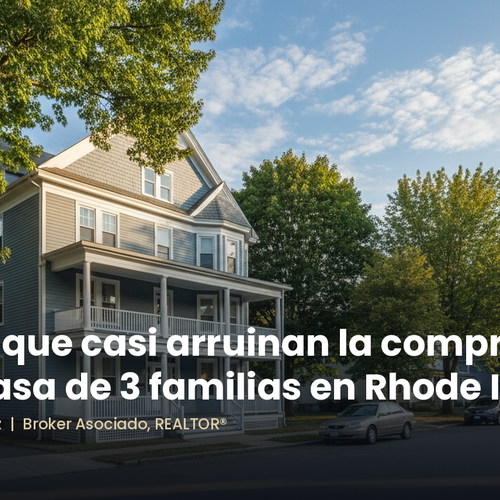
3 errores que casi arruinan la compra de una casa de 3 familias en Rhode Island (la historia real de Julio)
Un prestamista que no cumplió, un seguro al doble y un depósito de inquilinos que nunca llegó al cierre. Así casi se cae la compra…
Read ArticleLooking at a 2–4 family?
Run the real numbers before you offer.
Actual versus market rents, the FHA self-sufficiency test, taxes, insurance and financing. Alex has closed more than 275 transactions, many of them multifamily in Providence, Pawtucket and Central Falls, and will tell you plainly whether a property works.
Schedule a multifamily callEnglish or Spanish · Call or text 401-426-4857 · Contact form
196 Waterman St, Providence, RI 02906 · C: (401) 426-4857 · O: (401) 351-2017 · [email protected] · alexparmenidez.realtor